FOR INVESTORS & OWNERSHIP GUIDES
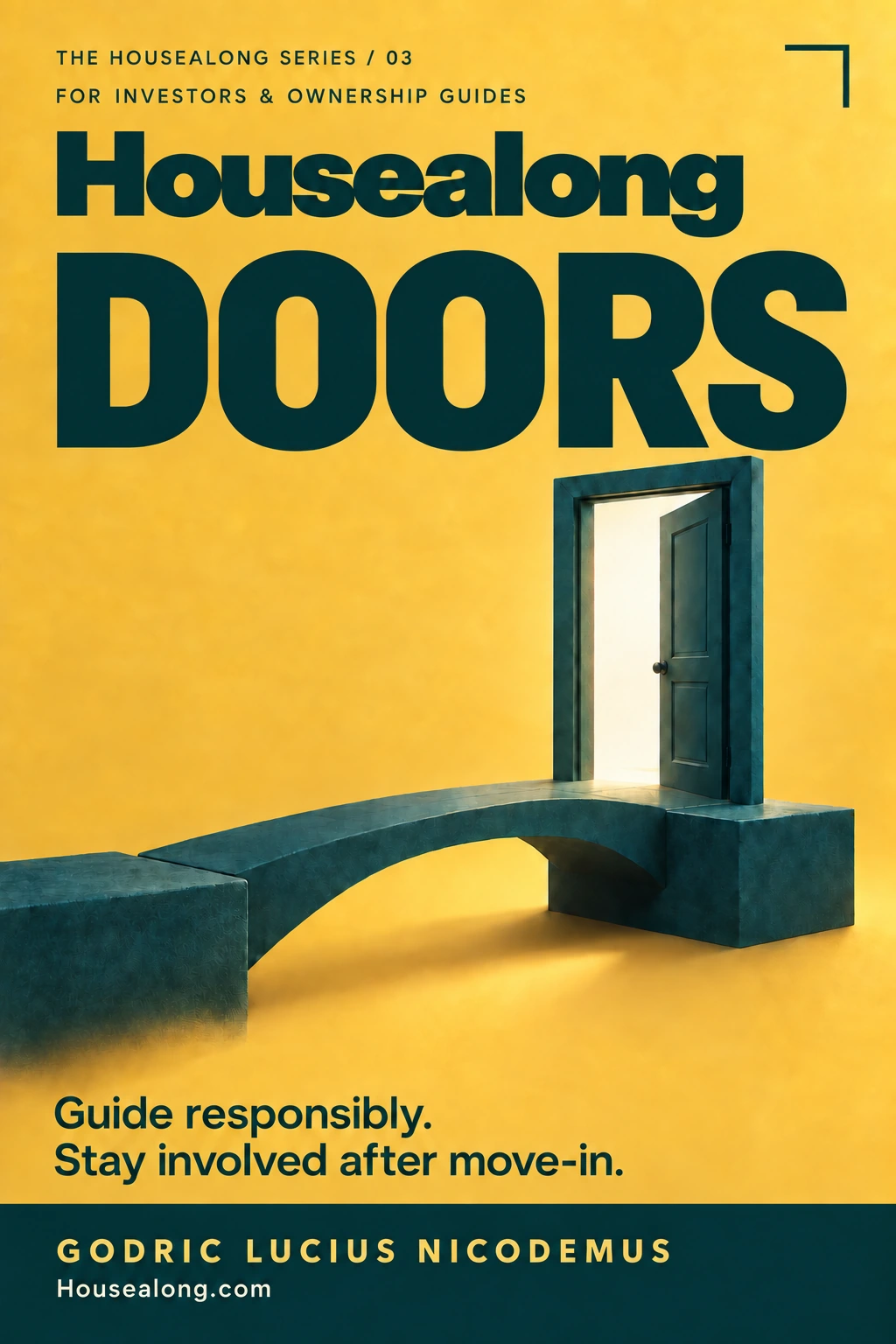
HOUSEALONG DOORS COURSE
Open the door. Do the work after move-in.
A CLEARER PATH STARTS HERE
Your next chapter.
Coming soon.
The video lessons are in development.
Explore the learning topics while we prepare the course.
What this course is about
Learn the responsibilities behind a more thoughtful lease option process—from understanding both sides to coordinating support after move-in.
Start with the topic previews below. Full webinar lessons will appear here as they become available.
WHAT YOU’LL LEARN
01The Ownership Guide standard
Start with the purpose of the role.
- Understand why move-in is the starting line.
- Recognize conflicts of interest and the limits of a guide’s role.
- Build a process around informed decisions and realistic outcomes.
02Understand both sides
Listen before proposing a strategy.
- Clarify the property owner’s priorities, alternatives, and responsibilities.
- Understand the tenant-buyer’s needs without making approval promises.
- Know when a different strategy or professional referral is the better answer.
03Evaluate the property and terms
Look beyond the headline spread.
- Investigate title, financing, condition, and insurance.
- Understand both sides of a sandwich lease option.
- Use downside scenarios and professional review before committing.
04Coordinate qualified professionals
A guide does not replace a licensed specialist.
- Map the roles of attorneys, agents, lenders, and counselors.
- Use appropriate permission before sharing personal information.
- Document responsibility, compensation, and handoffs clearly.
05Guide the journey after move-in
Turn a roadmap into a working routine.
- Establish milestones, check-ins, and a record of progress.
- Address missed milestones promptly and respectfully.
- Reassess when the buyer’s circumstances or financing outlook changes.
06Earn trust through practice
Knowledge must show up in the work.
- Use case reviews, documented practice, and appropriate supervision.
- Measure outcomes and process quality without inventing success rates.
- Treat referrals as earned responsibility, not a course-completion promise.
The principle to keep in mind
Ownership Guide is a support role, not a license. Training does not by itself authorize regulated work, certify competence, or guarantee referrals.